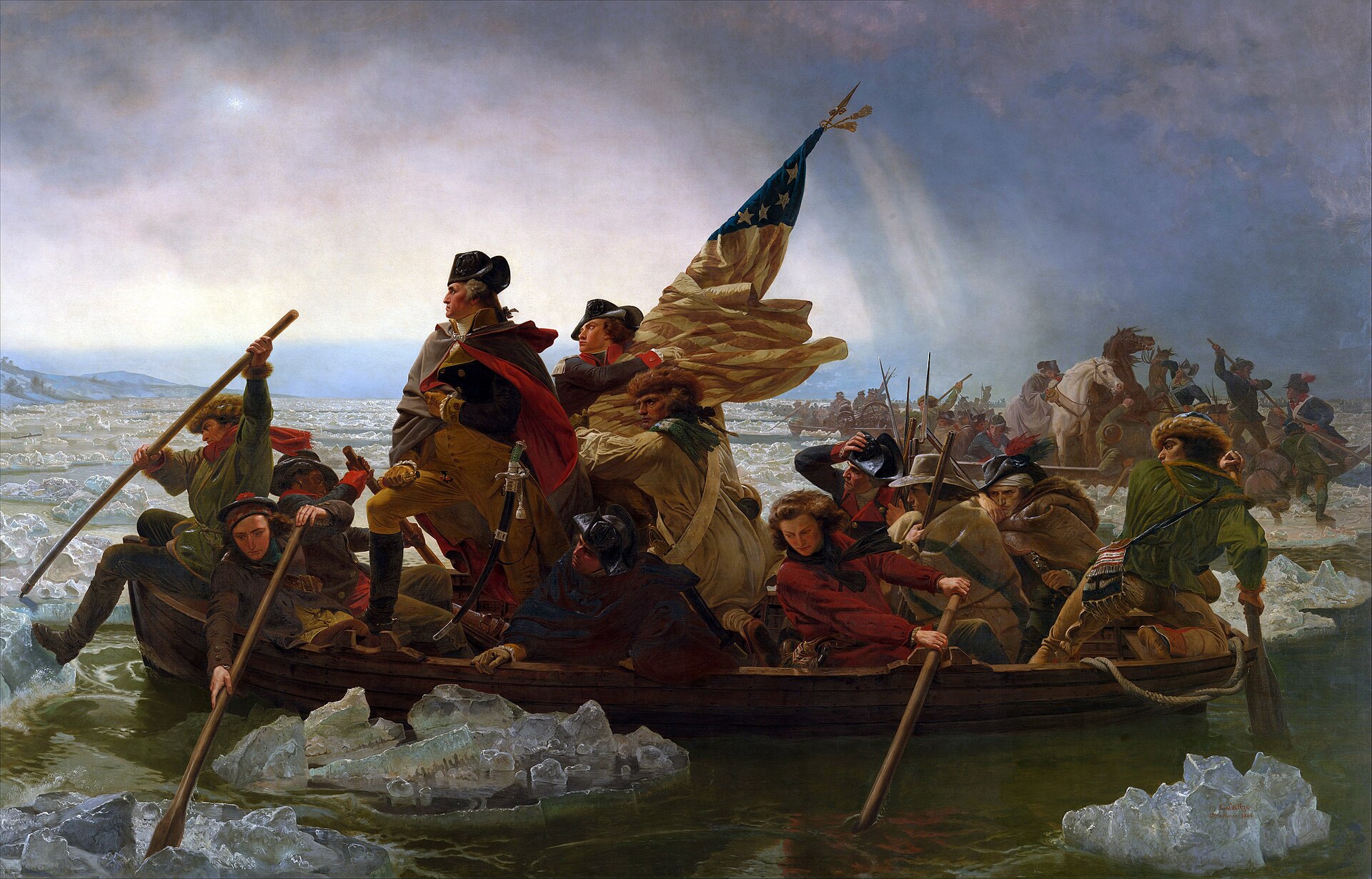

For 250 years, the American Revolution has inspired millions around the world. Nonetheless, some argue that it was little more than a power struggle between two groups of white property owners. Superficially, there is some truth to this. However, as historical materialists, our task is to delve beneath the surface. We must unravel the inner contradictions, fundamental processes, economic transformations, and class struggles that ultimately motivated and drove the revolution.
Flowing from Trotsky’s definition, it was the decisive entry of the masses onto the stage of history that stamped this process as revolutionary. Whether they were clear about their aims or not, millions of ordinary Americans awoke to political and social consciousness and seized their destiny in an attempt to change society.
In short, what unfolded in Britain’s North American colonies was complex and contradictory. Just as the American Civil War was the country’s Second Revolution, the First Revolution was its first Civil War. It was not purely an anti-colonial war for national liberation, democracy, and republicanism. Nor was it simply a war over land and the expropriation of Indigenous peoples and for the extension of chattel slavery. It was all of this and more—a profound, though incomplete, political and social revolution.
This will all be explained by John Peterson, author of “Revolution and Counterrevolution in America” and “Colossus”, as well as leading member of the Revolutionary Communists of America.
Reading list
Books
- John Peterson – Revolution and Counterrevolution in America (English)
Articles
- John Peterson – Book Preview: Revolution and Counterrevolution in America (English) (Spanish) (Portuguese)
- John Peterson – Shays’ Rebellion and the American Revolution (English)
- John Peterson – Class Struggle and the American Revolution (English) (French)