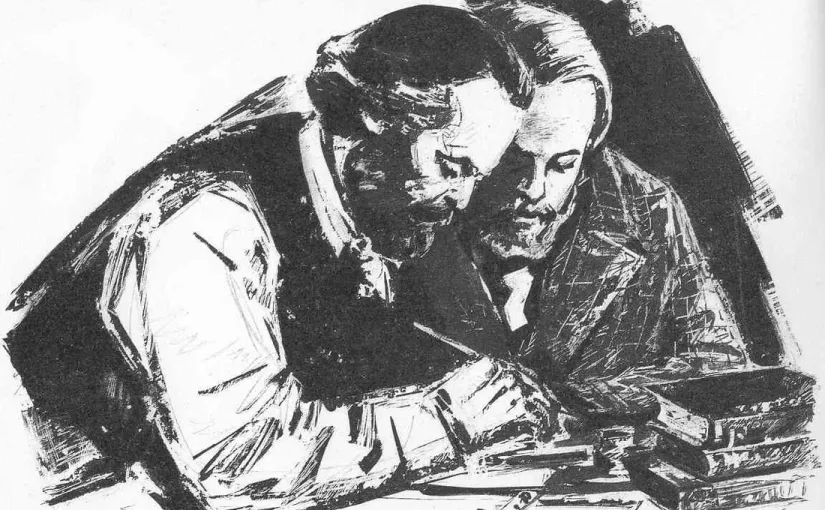

Scientific socialism did not spring from the mind of the young Marx like Athena from the head of Zeus. The development of Marxism – its method and fundamental ideas – was the result of a process driven by a combination of factors.
The major events of the first half of the nineteenth century in Europe; the feverish development of capitalism in Great Britain; the first independent mobilizations of the working class in France (and elsewhere); the influence of the ideas of Hegel, Feuerbach and the “utopian socialists”: these were the main premises Marx’s doctrine.
This talk – given by leading member of the PCR in France, Jerôme Metellus – will focus on his philosophical method, for it is upon this that the entire body of ideas of scientific socialism depends. Marxism marks a profound break in the entire history of philosophy. As Marx emphasized in the 11th of his Theses on Feuerbach, our philosophy seeks not only to interpret the world, but to transform it.
Reading list
Articles
- Rob Sewell – “Introduction to The ABC of Materialist Dialectics” (English)
- Alan Woods – “Marx’s revolution in philosophy – Reflections on the Theses on Feuerbach” (English) (Spanish) (Portuguese)
- David Riazanov – “Marx and Engels” (English)
- Alan Woods – “The History of Philosophy” (Chapter 11: “From Hegel to Marx”) (English) (Spanish) (French)
Videos
- Jerôme Metellus – How did Karl Marx become a communist? (French)